HEWITT INERTIA DYNO / BRISTOW, IOWA
Patented inertia dynos.
Built for your race.
Custom-built for go-karts, small engines, quarter midgets and clutch testing.
Tell Stan about your engine and goals for a custom quote including freight.

Dyno Sale and 2027 Price Sheet
Prices Good Through December 31, 2026
Two used dynos for sale, plus new dynos, updates, and replacement parts. Most items are 5% off through December 31, 2026. Email for an updated quote on the items you’re interested in.
View the latest dyno sale and complete price sheet →
Call or text: 641.512.3395 · hewittdyno@gmail.com
From Stan’s shop · Bristow, Iowa
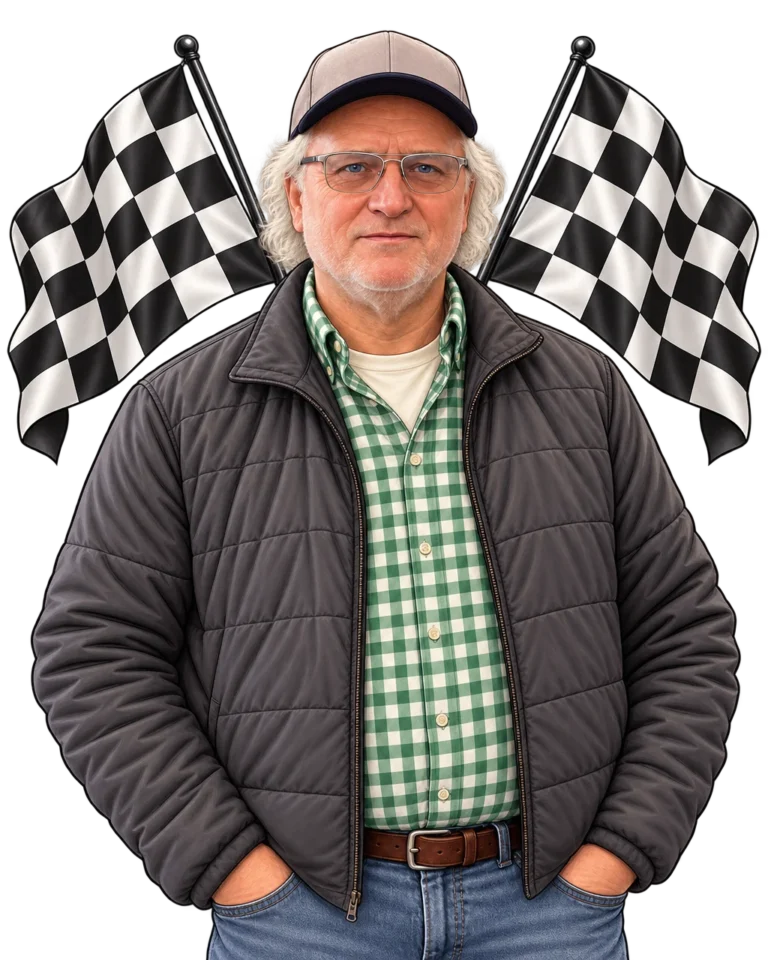
Meet the builder
Stan loves to win — and he wants to help your team win by measuring what matters. Around go-karts since 1978, he brings more than four decades as a racer, engine builder and inventor. Engines built in his Bristow, Iowa shop went on to win several national championships.
He built his first inertia dynamometer in the winter of 1994–95 to get measurements he could trust. It became the patented Hewitt Inertia Dyno, designed to measure horsepower to within a tenth of a horsepower, plus engine acceleration and clutch performance.
Stan still builds each dyno and supports customers personally, including phone training.
Precision in the shop takes seconds off on the track.
Stan Hewitt’s Patented Inertia Dyno & Dynamometer
Designed for measurements you can trust
Hewitt Inertia Dynos are in use in 11 countries, including the U.S., Canada, Australia and New Zealand. More than 300 are in North America, at racing shops, schools and engine builders’ benches.
Every dyno is custom-built for your specific engine type, horsepower range, and application. Call Stan directly at 641.512.3395 to discuss your project — it’s always best to talk through your needs before ordering.
What Can You Do with a Hewitt Inertia Dyno?
Acceleration Analysis — Measure engine acceleration in precise RPM increments (50, 75, 100). Identify where power falls off and test which changes make your engine accelerate faster across your race RPM range.
Time Comparisons — View total time in .001-second increments across any RPM range. Compare multiple dyno pulls side-by-side.
Clutch & Torque Converter Analysis — See clutch engagement RPM, slippage ratio, and lock-up point relative to engine RPM or elapsed time.
HP & Torque Graphing — Graph SAE-corrected torque and horsepower vs. RPM with up to 6 overlay comparisons. Zoom into any section in 1/100th RPM increments.
Reporting — Instant Excel-format reports with torque, HP, and all sensor data (temperature, air/fuel ratio). Print any graph or report.
Air/Fuel Ratio (Pro Option) — Monitor air/fuel mixture at any RPM and correlate it to torque/HP or acceleration on 2- or 4-cycle engines.
Electronic Blow-By Sensor (Optional) — Measure ring leak-down, flutter, compression loss, and valve bounce vs. RPM. Handles up to 1,000 HP across 3 ranges.
Fuel Flow Measurement — Available for engines under 5 HP using electronic sensors.
Buying Guide: Things to Consider Before Ordering
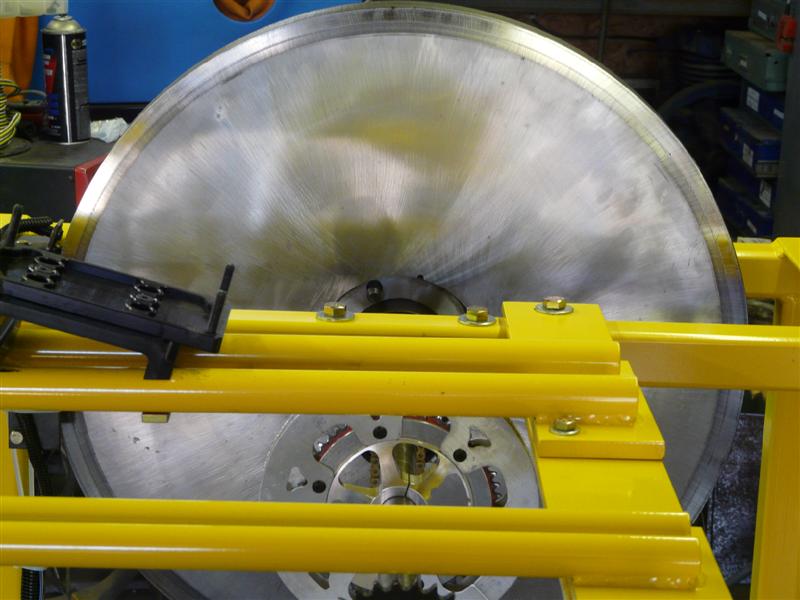
HP Range — Your minimum and maximum HP determines flywheel size. The most common request is 5–30 HP. Chain/clutch dynos allow ratio changes (10:1 to 3:1). Electric start belt-drive dynos have a narrower RPM window.
2-Cycle vs. 4-Cycle — 2-cycle engines need a smaller flywheel OD. Most 4-cycle low-RPM applications can use flywheels up to 31″ OD. Flywheel RPM must never exceed 2,500.
Dyno Room Door Size — Measure your door width (usually 28″ or 36″) before ordering — this affects dyno table dimensions.
Axle & Bearing Size — 1¼” stress-proof axles for dynos up to ~27 HP. 1¾” axles and bearings recommended for 30 HP and above. As of 2011, two-bearing axle design improves sensitivity to minute HP/torque changes.
Table Length — Standard 36″ or 48″ tables available; custom lengths on request. One-way sprag clutch available but not recommended for general use due to reliability and data accuracy trade-offs.
Electric Start — Gear-reduction GM starters for dynos up to 25 HP; Cummins diesel starters for 25 HP+. 24-volt systems crank 60% faster for exotic engine applications.
Data Systems — Original 9-pin serial systems (legacy support available). USB 4-channel Pro system (highly recommended): expandable to 21 channels, includes inductive RPM clamp, SAE weather correction, and Pro software.
Powder Coat Colors — Red, blue, yellow, white, black, green, or custom colors available.


Frequently Asked Questions
What does a Hewitt inertia dyno measure?
A Hewitt inertia dyno measures engine acceleration and graphs SAE-corrected horsepower and torque against RPM. It can compare dyno pulls and show clutch engagement, slippage ratio, and lock-up.
Which engines can a Hewitt inertia dyno test?
Dynos are custom-built for go-karts, small engines, quarter midgets, Jr. Dragster engines, and clutch testing. Discuss your engine type and horsepower range with Stan before ordering.
How do I choose the flywheel size and horsepower range?
Your minimum and maximum horsepower determine flywheel size. The most common request is 5–30 HP. Chain/clutch dynos allow gear-ratio changes from 10:1 to 3:1; electric-start belt-drive dynos have a narrower RPM window.
Do 2-cycle and 4-cycle engines need different flywheels?
For mostly 2-cycle engines, a smaller flywheel outside diameter is recommended. Most 4-cycle low-RPM applications can use flywheels up to 31 inches outside diameter. The dyno flywheel must never exceed 2,500 RPM.
Are electric-start dynos available?
Yes. Hewitt uses gear-reduction GM starters on dynos up to 25 HP and Cummins diesel starters on dynos over 25 HP. Electric-start dynos use belt drive, and one-way sprag-clutch options are available.
Is leasing available?
Leasing may be an option for businesses that have been operating for over a year. Contact Stan to discuss your application.
What training and support are included?
Up to one hour of phone training is included with every dyno. Ongoing support is available: send Stan your graphs by phone and he can discuss what he sees.
How do I get a dyno quote?
Call Stan at 641.512.3395, email hewittdyno@gmail.com, or visit the Free Quote page. Have your engine type, minimum and maximum horsepower, dyno-room door width, preferred drive and electric-start options, custom options, and state or ZIP code ready. Stan provides a detailed written estimate including freight to your ZIP code.
YOUR ENGINE. YOUR APPLICATION.
Build the right dyno for your shop.
Talk with Stan about your engine, horsepower range and testing needs.